Acupuncture Charts and Posters
Applied Kinesiology Chart - 8.5 " X 11"
Now available in poster size Here
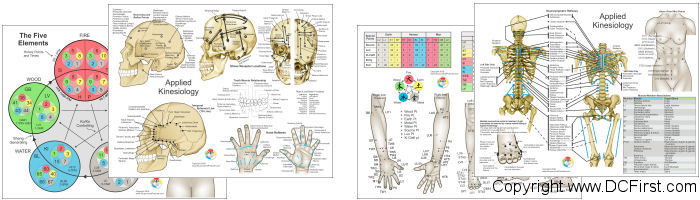
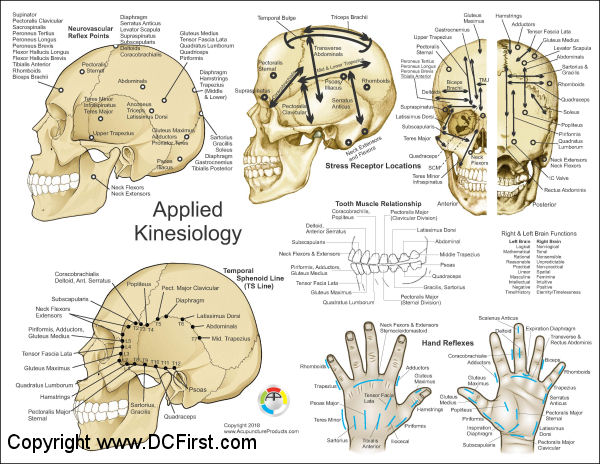
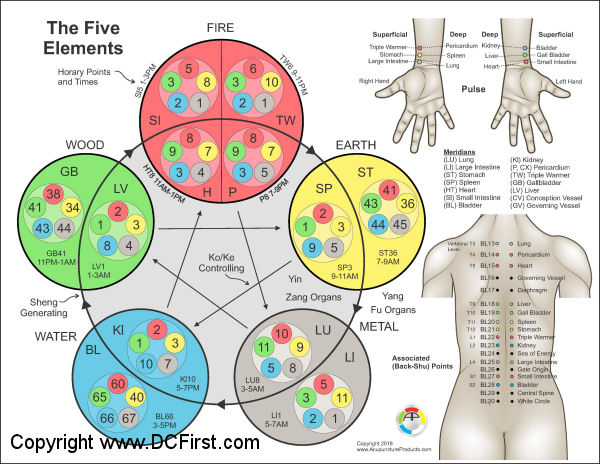
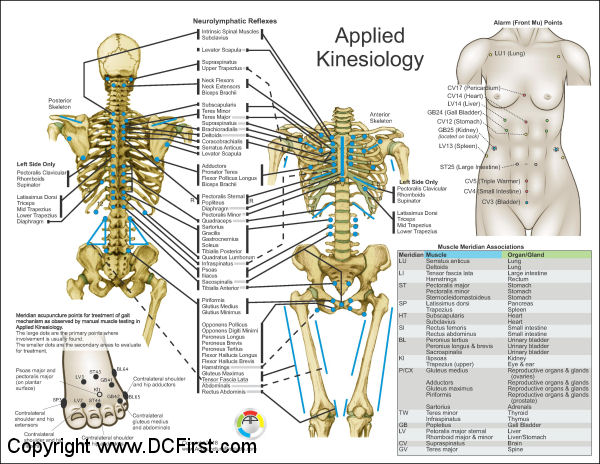
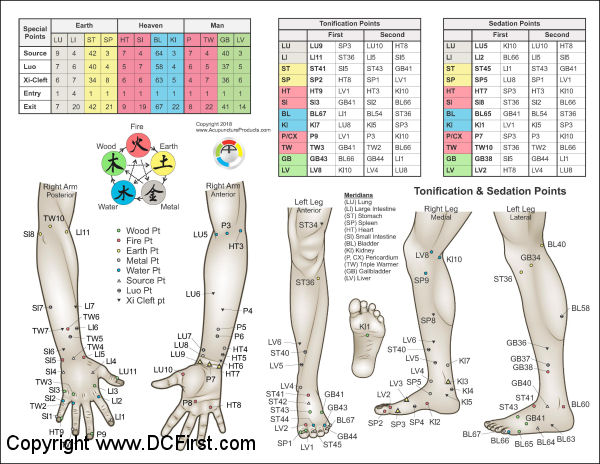
Applied kinesiology chart showing the neurolymphatic reflex points, acupuncture sedation points, acupuncture points for the treatment of gait mechanism, muscle/meridian association, TS line, stress receptor locations, neurovascular reflex points, tooth muscle relationship and hand reflexes. Designed for manual therapists, chiropractors and osteopaths.
8.5" X 11" double sided laminated chart. Applied kinesiology chart showing the neurolymphatic reflex points, acupuncture sedation points, acupuncture points for the treatment of gait mechanism, muscle/meridian association, TS line, stress receptor locations, neurovascular reflex points, tooth muscle relationship and hand reflexes.
8.5" X 11" Double-Sided Laminated Applied Kinesiology Chart

Temporal Sphenoidal Line (TS LIne) and Neurolymphatic Reflex Points

Key Features
Neurolymphatic reflex points - front & back
Temporal Sphenoidal Line (TS line)
Stress receptor locations
Neurovascular reflex points
Acupuncture sedation points with muscle associations
Acupuncture points for the treatment of gait mechanism
Muscle/meridian association
Tooth muscle relationship
Right & left brain functions
Hand reflexes
Laminated Double-sided Applied Kinesiology Chart - 8.5 " X 11"
Please check your shipping address before completing your transaction with Paypal!
Shipped flat, never rolled!
Money back guarantee on all orders.
$14.95 + $5.95 Shipping Priority Mail.
Shipping Rates
USPS Priority Mail USA Orders & USPS First Class International for international orders.
Order Total = $0.01 to $50.00 Shipping $5.95
Order Total = $50.01 to $100.00 Shipping $7.95
Order Total = $100.01 to $200.00 Shipping $9.95
Order Total = $200.01 to $500.00 Shipping $12.95
Order Total = $500.01 and up Shipping $15.95
|
Effects of Spinal Subluxation Laminated 17" X 22" |
Applied Kinesiology Poster Laminated 17" X 22" |
Using Muscle Testing in Meridian Therapy
by Jake Paul Fratkin, OMD
THE WORK OF DR. INEON MOON. When I first started on the path of Meridian Therapy under Dr. Ineon Moon 23 years ago, he demonstrated the value of muscle testing for determining excesses and deficiencies in the channels. He learned the actual technique from chiropractors using Applied Kinesiology (AK), who would test a patientīs arm or leg for relative strength. In AK, the patient, the doctor, or a third party touches a spot on the body (this is called therapy localization) and then test an indicator limb to see if it goes weak. Dr. Moon used this technique to make his own discoveries. He learned that if one finger touched a point and the indicator muscle was weak, this indicated a deficiency, and that if two fingers touched (usually patient and practitioner together), this indicated an excess.
Read the full article Using Muscle Testing in Meridian Therapy